


By Emigdio Rojas, Founder & CEO, Red Collective
July 21, 2026
Natural disasters expose more than damaged infrastructure; they reveal the strength of institutions, the resilience of communities, and the ability of leaders to work together during moments of crisis.
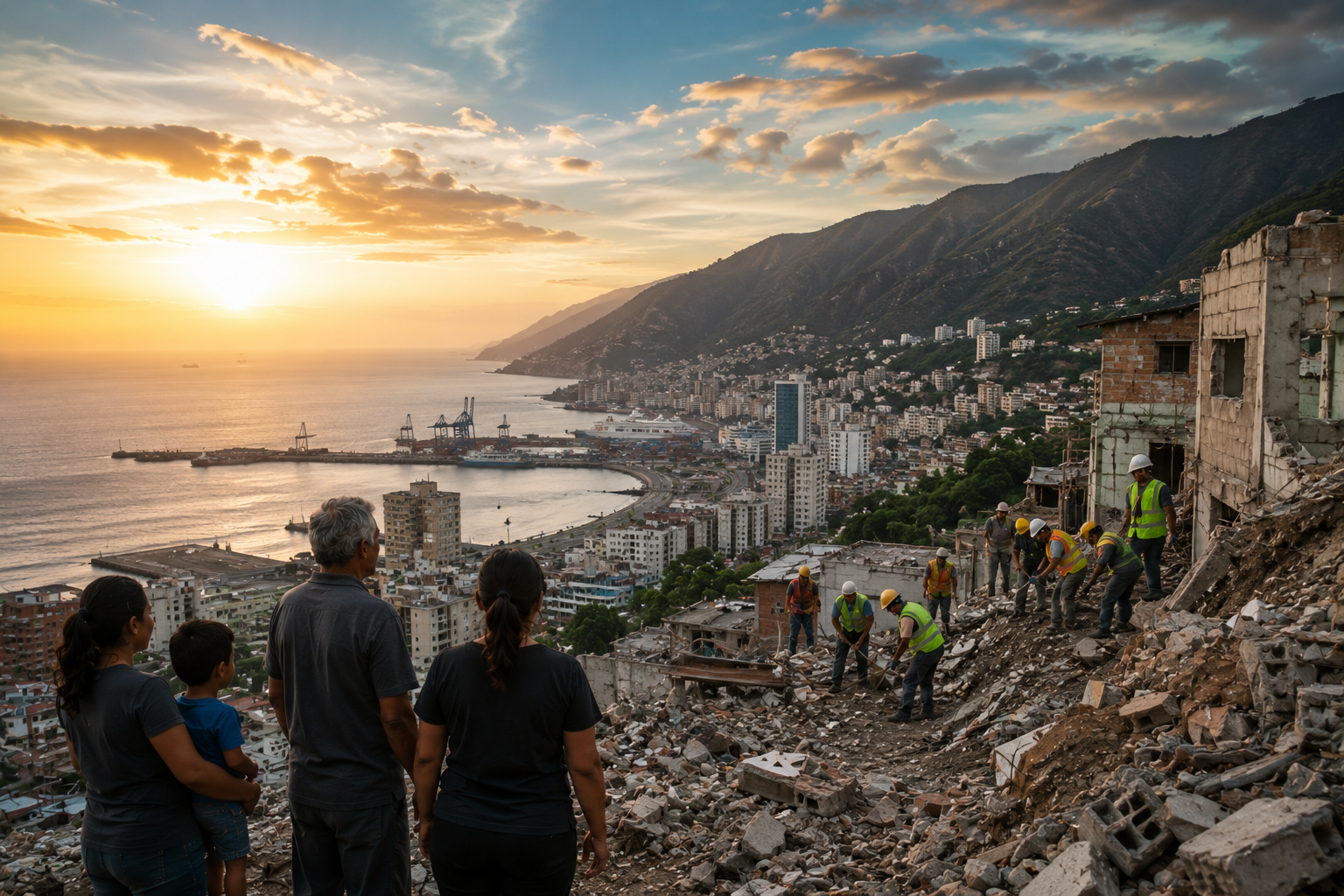
The recent earthquakes in Venezuela are a painful reminder of the country's vulnerabilities. Beyond the urgent humanitarian response, they present an important question: How can Venezuela use this moment to build a stronger, more resilient future?
Global experience shows that recovery is about far more than rebuilding structures. It requires restoring trust, strengthening institutions, improving coordination, and creating partnerships among government, the private sector, international organizations, civil society, and local communities.
Emergency response must always come first: saving lives, restoring essential services, and supporting affected families. However, the United Nations Office for Disaster Risk Reduction emphasizes the importance of the Build Back Better approach, using recovery as an opportunity to strengthen infrastructure, institutions, and community resilience rather than simply replacing what was lost.
Similarly, the World Health Organization (WHO) and the Pan American Health Organization (PAHO) stress that resilient health systems, coordinated emergency response, and continuity of essential services are fundamental to successful long-term recovery.
For Venezuela, rebuilding will require coordinated action across healthcare, energy, telecommunications, transportation, housing, education, and economic development. No single institution can accomplish this alone.
One of the most overlooked aspects of recovery is communication.
Communities need reliable information. Partners need coordination. Donors need confidence that assistance is reaching those who need it most.
The United Nations Development Programme (UNDP) has consistently highlighted that transparency, accountability, and community participation are essential for rebuilding trust after disasters. For Venezuela, where institutional confidence has been challenged for years, these principles will be critical to attracting both domestic and international support.
Organizations such as Global Empowerment Mission (GEM) have demonstrated how effective logistics, local partnerships, and transparent communication can strengthen humanitarian response in Venezuela. Their work illustrates that recovery succeeds when assistance not only reaches communities but is delivered in ways that inspire confidence and accountability.
The response has also demonstrated the importance of international coordination. The U.S. Department of State has helped facilitate humanitarian shipments to Venezuela, while U.S. military personnel have supported the movement and distribution of assistance in cooperation with nonprofit and local partners.
Looking ahead, institutions such as U.S. Southern Command (SOUTHCOM), multilateral agencies, neighboring governments, and regional humanitarian organizations can contribute technical knowledge, logistics capabilities, emergency planning, and coordination experience.
Such involvement should support, not replace, Venezuelan leadership and local knowledge. Effective international assistance must remain transparent, accountable, and aligned with the priorities of affected communities.
The Venezuelan diaspora represents one of the country's greatest assets.
Communities across the United States, particularly South Florida, bring expertise in engineering, healthcare, logistics, finance, technology, and business. Combined with the region's role as a gateway to Latin America, this network can help connect Venezuela with international partners, investment, and specialized knowledge.
The key will be to ensure these efforts remain coordinated, transparent, and aligned with local priorities.
Businesses contribute more than funding. They provide technical expertise, innovation, operational capabilities, and the ability to execute complex projects.
The World Bank has repeatedly demonstrated that public-private partnerships are among the most effective tools for rebuilding resilient infrastructure and accelerating economic recovery after disasters. For Venezuela, industries such as energy, telecommunications, logistics, construction, technology, and financial services will play an essential role in long-term revitalization.
Successful investment, however, depends on collaboration, local understanding, and sustainable solutions.
Experience from organizations including UNDRR, UNDP, WHO, PAHO, the World Bank, and humanitarian partners points to four consistent lessons:
Collaboration: Governments, businesses, nonprofits, and communities must work together.
Long-term vision: Recovery should create stronger systems, not simply restore the past.
Local leadership: International support is most effective when guided by local knowledge.
Trust: Transparency, accountability, and communication are fundamental to lasting progress.
The earthquakes have created a moment of profound hardship, but history shows that crises can also become catalysts for transformation.
Recovery will require leadership, compassion, technical expertise, and meaningful collaboration between Venezuelans and international partners. The objective is not simply to rebuild infrastructure, but to restore confidence, create opportunities, and strengthen the country's long-term resilience for future generations.

Emigdio Rojas is Founder and CEO of Red Collective, a Miami-based strategic advisory firm focused on strategic communications, stakeholder engagement, market intelligence, and business growth across the U.S. and Latin America. With more than 20 years of experience advising multinational companies, governments, and organizations, he helps clients navigate complex markets at the intersection of business, geopolitics, and public affairs. Through Red Collective Energy Advisory, he focuses on energy investment, market dynamics, and strategic intelligence across the Americas.
